
If you are three weeks past giving birth and still crying every day, that is longer than the baby blues usually last. The baby blues are common and typically fade within two weeks. Sadness, worry, or hopelessness that lasts longer, or feels severe, may be postpartum depression. You are not alone, and you did not cause this. In a CDC survey, about 1 in 8 U.S. women with a recent birth reported symptoms of postpartum depression, and in Connecticut the rate was 11.7%. Postpartum depression is a medical condition. It is not caused by anything you did or did not do, and it can be treated.
What Are the Baby Blues?
The baby blues are mild mood changes that many women have right after birth. For many women, they ease on their own within two weeks.
If you have the baby blues, you may:
- Have mood swings
- Feel sad, anxious, or overwhelmed
- Have crying spells
- Lose your appetite
- Have trouble sleeping
Hormone levels drop sharply in the first day after birth. Your body is healing. You are feeding a baby around the clock and sleeping in short stretches. A newborn needs constant care, so feeling tired or overwhelmed some of the time is completely normal.
What Are the Signs of Postpartum Depression?
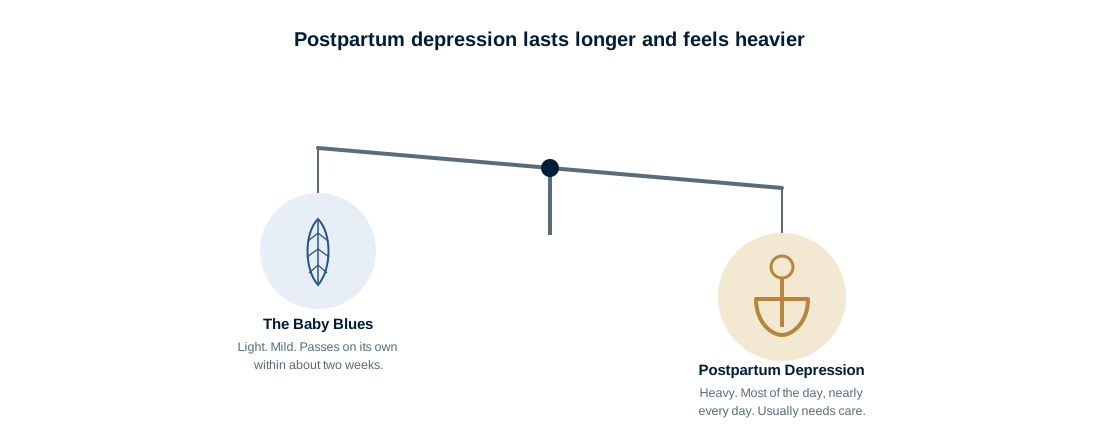
Postpartum depression lasts longer and feels heavier than the baby blues. The sadness, worry, and exhaustion can make it hard to get through the day, including caring for yourself and your baby.
Common signs include:
- Feeling sad, anxious, or empty most of the day for at least two weeks
- Crying more often than usual
- Feeling angry, irritable, or restless
- Feeling hopeless, guilty, or worthless
- Losing interest or joy in things you used to enjoy
- Trouble sleeping even when the baby is asleep, or sleeping much more than usual
- Eating much more or much less than usual
- Trouble focusing, remembering, or making decisions
- Feeling distant from your baby or having trouble bonding
- Constant doubts about whether you can care for your baby
- Pulling away from friends and family
- Thoughts of harming yourself or your baby
One sign is easy to miss. Almost every new parent is tired. With depression, you may lie awake while the baby sleeps, or wake up early and not fall back asleep.
Many women do not tell anyone how they feel. They are ashamed of not feeling happy, or they fear being judged. Having these feelings does not mean you are a bad mother; it means you need support.
Can I Have Postpartum Depression if I Love My Baby?
Yes. Postpartum depression is not a measure of how much you love your child. You can love your baby and still feel numb, sad, or disconnected. Some women say they feel as if they are not really the baby's mother. These feelings are symptoms of an illness. They are not a sign of who you are as a parent.
Can Postpartum Depression Start Months After Birth?
Yes. Most cases begin within 4 to 8 weeks after birth. Depression can also start later in the first year. If symptoms begin any time in that first year and last more than two weeks, call your doctor, nurse, or midwife. Depression can also begin during pregnancy.
Baby Blues vs. Postpartum Depression: How Do They Compare?
The baby blues are mild and short. Postpartum depression lasts longer, feels heavier, and usually does not improve without treatment.
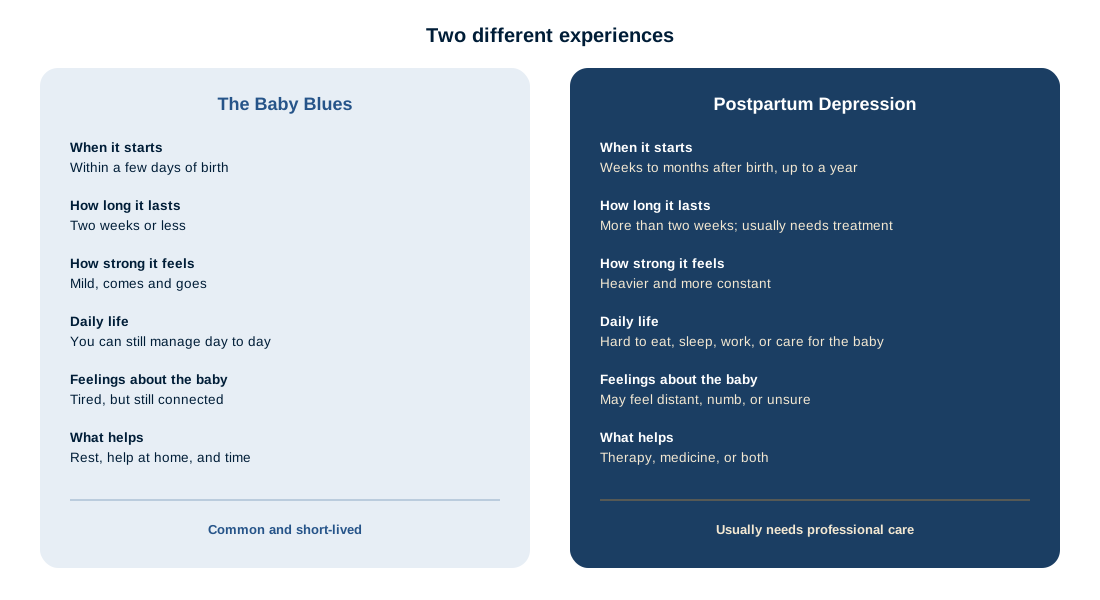
If you are not sure which one you have, that is reason enough to ask. Only a health care provider can tell whether your symptoms come from postpartum depression or something else. Some physical problems, such as low thyroid levels after birth, can cause similar symptoms and show up on a simple blood test.
How Long Does Postpartum Depression Last?
There is no set timeline. Unlike the baby blues, postpartum depression usually does not go away on its own. Women with postpartum depression generally do not feel better without treatment.
Symptoms can also last a long time. A National Institutes of Health study followed more than 4,500 mothers for three years after birth. Most had low symptoms the whole time. About 13% started with moderate symptoms that eased over time. About 8% started with mild symptoms that got worse. About 5% had high symptoms that stayed high, in some cases for years.
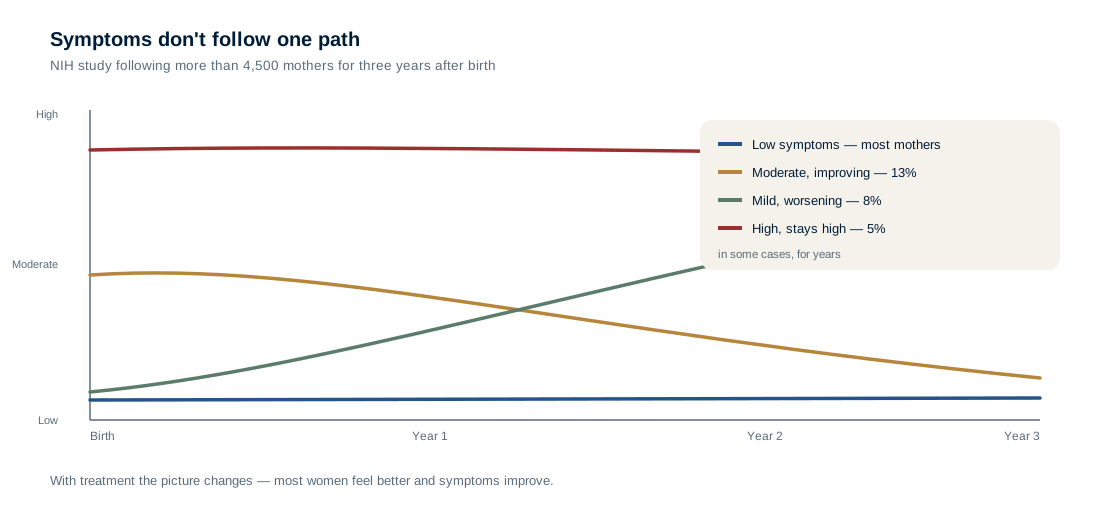
The takeaway: postpartum depression does not always show up in the first few weeks, and for some new mothers it lasts well past the first year.
With treatment, the picture changes. Most women feel better and their symptoms improve. Medicine for depression usually takes 4 to 8 weeks to work, and sleep, appetite, and focus often improve before mood does. The sooner you start treatment, the sooner you can start recovering.
Who Is More Likely to Develop Postpartum Depression?
Any new mother can develop postpartum depression, whatever her age, income, or background. The risk is higher if you:
- Had depression before or during pregnancy, or with an earlier baby
- Have a family history of depression or bipolar disorder
- Had a difficult or traumatic birth
- Have little support from a partner, family, or friends
- Are dealing with money problems, relationship strain, or other major stress
- Have a baby who was born early or has special health needs
Having a risk factor does not mean you will get depressed. It means it is worth telling your provider so they can watch for signs with you.
What Can You Do Right Now?
These steps will not replace treatment for depression, but they can help while you get care:
- Rest whenever you can, including when the baby sleeps.
- Ask your partner, family, and friends for specific help, such as one night handling the feeding or preparing a meal.
- Tell someone you trust how you really feel.
- Talk with other mothers or join a new-parent support group.
- Put off major life changes for now, such as a move or a job switch.
If the idea of asking for help feels impossible, ask your partner or a loved one to make the first call for you.
When Should You Call for Help?
Call your doctor, nurse, midwife, or your baby's pediatrician if:
- Your baby blues have not gone away after two weeks, or they feel very intense
- Symptoms of depression start any time in the first year after birth and last more than two weeks
- It is hard to work or get things done at home
- You cannot take care of yourself or your baby, such as eating, sleeping, or bathing
- You have thoughts about hurting yourself or your baby
Get help right away if you have thoughts of suicide or of harming your baby. Call or text 988 to reach the Suicide and Crisis Lifeline, or call 911. You can also call or text the National Maternal Mental Health Hotline at 1-833-TLC-MAMA (1-833-852-6262). It is free, confidential, and open 24 hours a day in English and Spanish.
A rare but serious condition called postpartum psychosis can also start after birth. Signs include seeing or hearing things that are not there, believing things that are not true, confusion, extreme suspicion, or a very high mood that seems out of touch with reality. This is a medical emergency. Call 911 or go to the nearest emergency room.
What Does Treatment Look Like?
Treatment for postpartum depression usually includes talk therapy, medicine, or both. Therapy helps you understand what you are feeling, can help change thoughts and habits that keep depression going, and build support around you. Some medicines for depression can be taken while breastfeeding. Your prescriber will go over the benefits and risks with you.
At Hopewell Health Solutions, care starts with an assessment to understand your symptoms, your history, and what support you have at home. Depending on what it shows, next steps may include individual therapy, psychiatric medication management, or a combined treatment plan.
For women who need more support than a weekly session, our Women's Wellness Intensive Outpatient Program meets Monday through Thursday, from 9 a.m. to 12 p.m. or 5 to 8 p.m., in Glastonbury and Westbrook. In-person and virtual options are available.
To get started, call (860) 735-1448. Our team will verify your insurance benefits at no cost before your first appointment.
What Matters Most
- The baby blues are common, mild, and fade within two weeks of birth.
- Sadness, worry, or hopelessness that lasts longer than two weeks, or feels severe, may be postpartum depression.
- Postpartum depression can start any time in the first year after birth and usually does not go away without treatment.
- Therapy, medicine, or both can help, and most women feel better with treatment.
- Thoughts of harming yourself or your baby need help right away. Call or text 988, or call 911.
There Is Hope to Heal
Hopewell Health Solutions provides outpatient mental health and psychiatric care from our Connecticut offices in Glastonbury, West Hartford, East Hampton, and Westbrook, plus telehealth statewide.
More than 50 licensed clinicians, prescribers, psychologists, and therapists work with us, and we are a Joint Commission accredited practice serving Connecticut clients since 2013.
Whether you are asking for yourself, your partner, or your daughter, admissions will walk you through the next step. Call (860) 735-1448.
Sources
- National Institute of Mental Health. 2023. Perinatal Depression. National Institute of Mental Health.
- Bauman, B.L., Ko, J.Y., Cox, S., et al. 2020. Vital Signs: Postpartum Depressive Symptoms and Provider Discussions About Perinatal Depression — United States, 2018. Morbidity and Mortality Weekly Report, 69(19), 575-581.
- Office on Women's Health. 2023. Postpartum Depression. U.S. Department of Health and Human Services.
- Centers for Disease Control and Prevention. 2024. Symptoms of Depression Among Women. Centers for Disease Control and Prevention.
- National Institutes of Health. 2020. Postpartum Depression May Last for Years. NIH Research Matters.
- Health Resources and Services Administration. n.d. National Maternal Mental Health Hotline. Maternal and Child Health Bureau.
Written by

Christina (Tina) Lindsay, PMHNP-BC, APRN
Board-Certified Psychiatric Mental Health Nurse Practitioner
Christina (Tina) Lindsay, PMHNP-BC, APRN is a board-certified psychiatric mental health nurse practitioner with Hopewell Health Solutions, located in Glastonbury and West Hartford, CT. Christina earned her bachelor's degree in sociology from Rutgers University, bachelor's degree in nursing from Azusa Pacific University, and master's degree in nursing from Chamberlain University. Christina has been a nurse since 2013 and has excelled in both medical-surgical and psychiatric nursing. Christina has extensive experience in behavioral health, as she served as assistant nursing manager in inpatient psychiatry and was honored with an Excellence in Nursing award from the hospital's psychiatric team. These educational milestones and career achievements have contributed to Christina's wealth of clinical knowledge and passion for the field of psychiatry.
Read Full Bio →Medically reviewed by Kristine Schlichting, PhD, Director & Founder.