

Postpartum anxiety is worry after having a baby that feels constant, hard to control, and bigger than the situation calls for. Every new parent worries. With postpartum anxiety, the worry does not ease once a question is answered, and it starts to take over your sleep, focus, and daily life. In 2023 survey data from the Centers for Disease Control and Prevention (CDC), about 1 in 5 women reported anxiety symptoms. Postpartum anxiety is treatable, and you do not need a diagnosis to reach out for help. This article explains the signs of postpartum anxiety, what postpartum panic attacks feel like, how long symptoms last, and how treatment works.
What Are the Signs of Postpartum Anxiety?
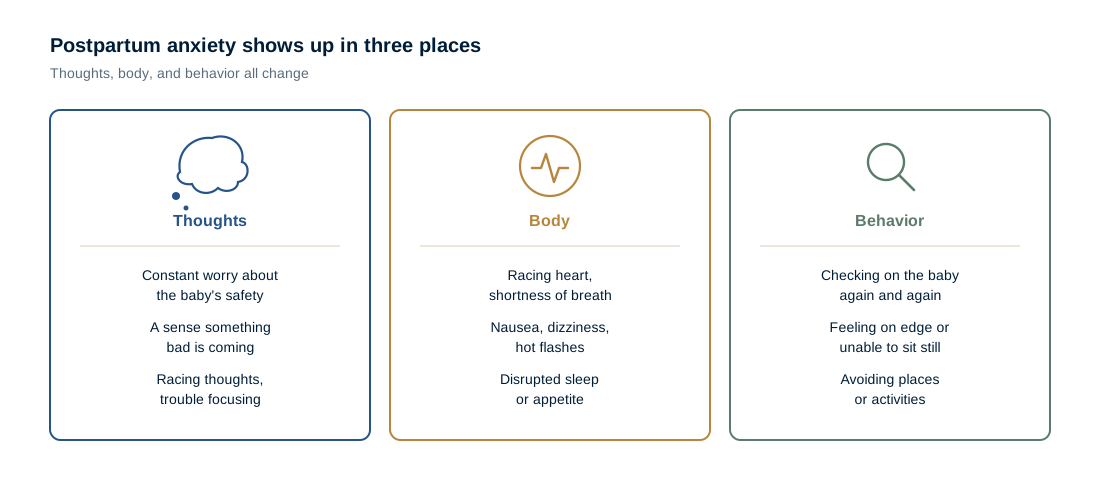
Postpartum anxiety can show up in your thoughts, body, and behavior. Common postpartum anxiety symptoms include:
- Constant worry, often about the baby's health or safety.
- A feeling that something bad is about to happen.
- Racing thoughts and trouble focusing.
- Disrupted sleep or loss of appetite.
- A racing heart, shortness of breath, nausea, dizziness, or hot flashes.
- Feeling on edge, irritable, or unable to sit still.
- Checking things over and over, such as how long ago the baby last ate.
- Avoiding places, people, or activities out of fear that you or the baby will get hurt.
These symptoms usually get in the way of daily life. That is one of the clearest differences between postpartum anxiety and ordinary worry.
Is This Normal New-Parent Worry or Postpartum Anxiety?
Some worry is expected. You are responsible for a newborn, your body is healing, and you are short on sleep. In the first days after birth, many mothers feel sad, worried, or tired. These baby blues usually go away within a few days.
Postpartum anxiety feels different. The worry can be all-consuming and nonstop, and it often centers on things that are unlikely to happen. Ordinary worry fades once the concern is settled. Anxious worry comes back even after you have been assured everything is fine.
I Cannot Stop Checking on the Baby, Is This Anxiety?
It might be. Checking on your baby again and again is a known sign of postpartum anxiety. Examples include checking how long ago the baby ate or making sure anything that could hurt the baby is put away. Some parents stay up all night because they are afraid the baby will stop breathing in their sleep.
A few checks a night are part of caring for a newborn. It becomes a concern when it starts to run your day: you cannot rest until you check again, the calm does not last, or you skip sleep to keep watching.
Sometimes this worry comes with unwanted, upsetting thoughts, or images of the baby getting hurt. When those thoughts lead to repeated checks, cleaning, or avoiding certain tasks, it may be perinatal obsessive-compulsive disorder (OCD), a related condition covered in our guide to postpartum OCD and intrusive thoughts. These images come from anxiety and are not a loss of touch with reality. If scary thoughts about hurting your baby will not go away, get immediate medical care.
What Do Postpartum Panic Attacks Feel Like?
A panic attack is a sudden wave of fear or discomfort, or a sense of losing control, even when there is no clear danger. Postpartum panic attacks can bring a pounding heart, shortness of breath, chest pain, dizziness, a closed-in feeling, and numbness or tingling in the hands or feet.
An attack can last from a few minutes to an hour or longer. It is frightening, but the attack itself is not life-threatening, and the physical symptoms usually ease with time. When attacks keep coming back and fear of the next one starts to shape your day, it may be a panic disorder, which requires structured treatment.
Could My Symptoms Be Something Physical?
Chest pain, trouble breathing, and a fast or pounding heartbeat can also signal a severe medical problem after birth. These symptoms are considered alarming during pregnancy and for up to a year after delivery. If you have them, get medical care right away and tell the provider that you recently gave birth. A doctor can rule out a physical cause before treating your symptoms as anxiety.
Who Is More Likely to Develop Postpartum Anxiety?
Postpartum anxiety has no single cause. Providers think several factors play a role, including the sharp drop in hormones after delivery, lack of sleep, and the heavy sense of responsibility that comes with a newborn.
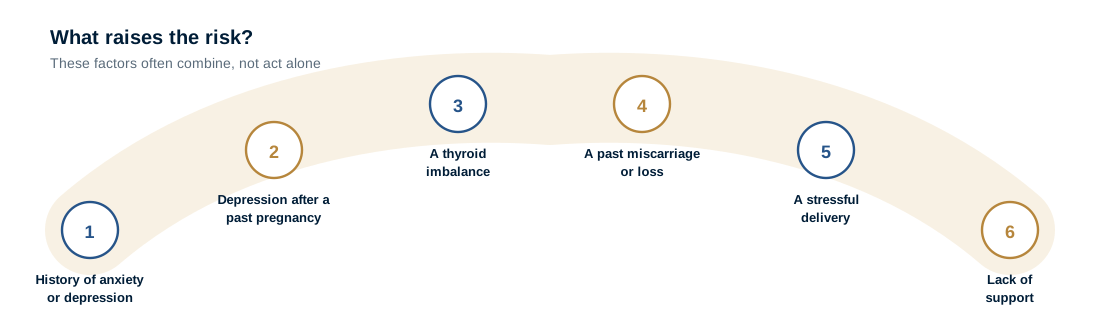
Here are the factors that raise the risk of postpartum anxiety:
- A personal or family history of anxiety or depression.
- Anxiety or depression diagnosed after a past pregnancy.
- A thyroid imbalance.
- A past miscarriage or loss of a child.
- A baby with health problems or a stressful delivery.
- Lack of support from a partner, family, or friends.
If any of these apply to you, talk with a counselor during pregnancy. Coping skills can make a difference before and after your baby is born.
Can You Have Postpartum Anxiety Without Depression?
Yes. Perinatal anxiety can happen on its own, but it often comes with depression. Signs of depression include sadness and crying, feelings of guilt or hopelessness, and losing interest in things you used to enjoy. The two conditions share many symptoms, and seeking medical help can identify whether you are dealing with one or both.
How Long Does Postpartum Anxiety Last?
There is no set timeline. Postpartum anxiety can begin during pregnancy, right after birth, or when the baby is several months old.
Timing helps tell it apart from the baby blues. The blues usually fade within a few days of birth. Feeling anxious, sad, or hopeless for longer than 2 weeks may point to a more serious condition.
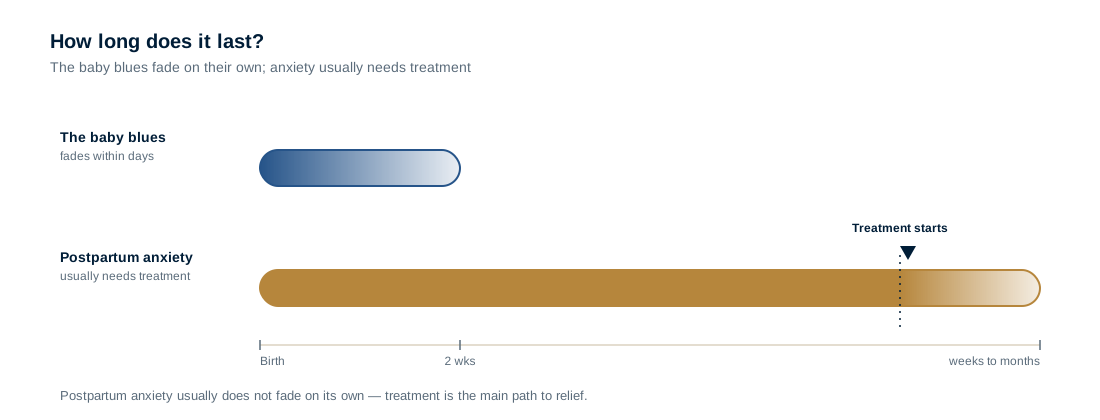
Postpartum anxiety does not last forever, but it usually does not go away on its own. Getting treatment from a healthcare provider is the main path to recovery. Anxiety can also return later, even after your baby's first birthday. Worry about your child that disrupts your life deserves attention at any age.
How Is Postpartum Anxiety Treated?
Treatment depends on your symptoms, your health history, and whether you are breastfeeding. Milder symptoms may improve with changes to daily routines and talk therapy. Medication may be an option when anxiety gets worse.
Talk Therapy
Cognitive behavioral therapy (CBT) is a type of talk therapy that helps you notice anxious thoughts and change how you respond to them. CBT teaches new ways to react to the bodily sensations of fear. Exposure therapy, a part of CBT, helps you face situations you have been avoiding, one step at a time.
Here is how that can look in practice. A mother who has stopped taking the baby outside because she fears something will happen might start with a short walk around the block with her partner. Later steps build from there, at a pace she and her therapist set together.
Medication, Including While Breastfeeding
Antidepressants called selective serotonin reuptake inhibitors (SSRIs) are the most common and most studied medicines for postpartum anxiety. Some antidepressants can be taken while breastfeeding. Let your prescriber know if you are breastfeeding or plan to, so you can weigh the benefits and risks. Therapy and medication appear to work better together than either one alone.
Support at Home
Practical help is part of treatment. Ask your partner, family, friends, or support groups for specific help with chores and baby care. One person handles laundry, another brings dinner, and another watches the baby so you can rest or take a walk.
Make sleep a priority. If you have a partner, trading night duties can give each of you one longer stretch of rest. Postpartum Support International also offers free online groups, and you can call or text its HelpLine at 1-800-944-4773.
When Should You Call for Help?
Contact your doctor, midwife, or a mental health provider if you have any signs of postpartum anxiety, especially if you:
- Worry all day, every day.
- Feel overwhelmed by day-to-day life.
- Feel like you are not bonding with your baby.
- Notice your anxious thoughts getting worse.
- Feel anxious, sad, or hopeless for more than 2 weeks.
If you have thoughts of harming yourself or your baby, get help right away. Call or text 988, call 911, or go to the nearest emergency room.
What Does Postpartum Treatment Include?
Care starts with an assessment. There is no single test for postpartum anxiety, so a clinician will ask about your worries, sleep, panic attacks, behaviors, mood, and support at home. Being open about what you feel gives your provider the most to work with. Because a thyroid imbalance is linked to anxiety after birth, your OB-GYN or primary care provider may also check your thyroid with a simple blood test.
At Hopewell Health Solutions, anxiety care includes individual therapy with CBT, exposure-based therapy, and dialectical behavior therapy (DBT) skills, which are practical tools for handling strong emotions. Medication management is also available where necessary, and a prescriber can review options that are compatible with breastfeeding. You can meet with us in person in Glastonbury, Westbrook, or West Hartford, or by telehealth.
Our Women's Wellness Intensive Outpatient Program offers structured care in a group designed for women who need more support than weekly therapy. The program runs in Glastonbury, with day and evening options in person or online.
To get started, call (860) 735-1448, and our team will verify your insurance benefits at no cost before your first appointment.
What Matters Most
- Postpartum anxiety is constant, hard-to-control worry after having a baby. About 1 in 5 new mothers in the U.S. report anxiety symptoms.
- Signs include racing thoughts, disrupted sleep, a racing heart, panic attacks, and checking on the baby over and over.
- The baby blues fade within days. Anxiety that lasts more than 2 weeks needs a provider's attention.
- Postpartum anxiety usually does not go away on its own. Therapy, medication, or both can help, and some medicines can be taken while breastfeeding.
- Get medical care right away for chest pain or trouble breathing. Call or text 988, or call 911, for thoughts of harming yourself or your baby.
There Is Hope to Heal
Hopewell Health Solutions provides outpatient mental health and psychiatric care from our Connecticut offices in Glastonbury, West Hartford, East Hampton, and Westbrook, plus telehealth statewide.
More than 50 licensed clinicians, prescribers, psychologists, and therapists work with us, and we have been a Joint Commission accredited practice serving Connecticut clients since 2013.
Whether you are asking for yourself or for someone you love, admissions will walk you through the next step. Call (860) 735-1448.
Sources
- Cleveland Clinic. 2025. Postpartum Anxiety. Cleveland Clinic.
- Postpartum Support International. 2026. Perinatal Mental Health: Signs, Symptoms and Treatment. Postpartum Support International.
- America's Health Rankings. 2026. Postpartum Anxiety in the United States. United Health Foundation. Data from CDC Pregnancy Risk Assessment Monitoring System, 2023.
- National Institute of Mental Health. 2025. Panic Disorder: When Fear Overwhelms. National Institute of Mental Health. National Institutes of Health.
- Office on Women's Health. 2023. Postpartum Depression. U.S. Department of Health and Human Services.
- Centers for Disease Control and Prevention. 2024. Urgent Maternal Warning Signs and Symptoms. Hear Her Campaign.
Written by

Christina (Tina) Lindsay, PMHNP-BC, APRN
Board-Certified Psychiatric Mental Health Nurse Practitioner
Christina (Tina) Lindsay, PMHNP-BC, APRN is a board-certified psychiatric mental health nurse practitioner with Hopewell Health Solutions, located in Glastonbury and West Hartford, CT. Christina earned her bachelor's degree in sociology from Rutgers University, bachelor's degree in nursing from Azusa Pacific University, and master's degree in nursing from Chamberlain University. Christina has been a nurse since 2013 and has excelled in both medical-surgical and psychiatric nursing. Christina has extensive experience in behavioral health, as she served as assistant nursing manager in inpatient psychiatry and was honored with an Excellence in Nursing award from the hospital's psychiatric team. These educational milestones and career achievements have contributed to Christina's wealth of clinical knowledge and passion for the field of psychiatry.
Read Full Bio →Medically reviewed by Kristine Schlichting, PhD, Director & Founder.