

Postpartum rage is sudden, intense anger after having a baby. It can look like yelling over small things, snapping at a partner, or shaking with anger you cannot explain. About 1 in 8 new mothers in the U.S. report symptoms of postpartum depression in the year after birth, and anger is one of its most overlooked signs. Many mothers feel ashamed of these feelings and keep them to themselves. This article covers what postpartum rage feels like, what triggers it, how long it lasts, and when to call for help.
What Does Postpartum Rage Feel Like?
Postpartum rage is not a formal diagnosis. It is a plain name for anger that feels bigger than the moment. Health agencies and maternal mental health groups list anger and irritability as signs of postpartum depression and anxiety.
Common postpartum rage symptoms include:
- Snapping, yelling, or swearing over small things, like a spilled bottle or a loud TV.
- Anger that comes on fast and feels nearly impossible to stop.
- Urges to slam doors, throw things, or break something.
- Replaying arguments or keeping score of what your partner did not do.
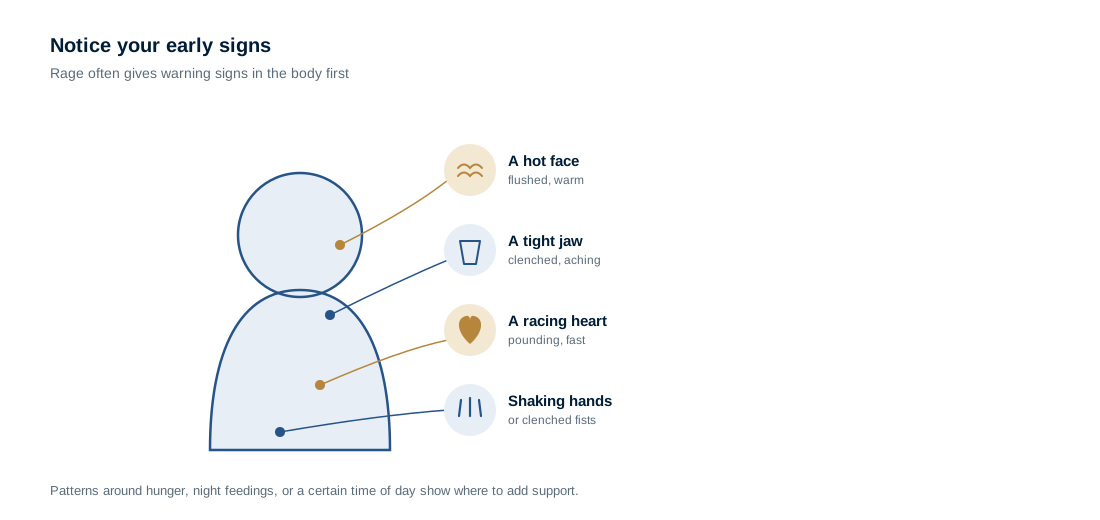
- A hot face, racing heart, tight jaw, or shaking hands during an outburst.
- Guilt, shame, or crying once the anger passes.
The anger often lands on the people closest to you: a partner, an older child, or a parent. It can also turn inward as harsh frustration with yourself.
Is It Normal to Feel This Angry After Having a Baby?
Some frustration is expected in the first weeks. Your body is healing, the baby needs care around the clock, and sleep comes in short pieces. Mild mood swings in the first two weeks are often called the baby blues.
Anger that is intense, happens most days, or lasts past those first weeks deserves attention. Postpartum Support International includes feeling more irritable or angry with the people around you in its self-check for new parents.
How Are Postpartum Depression and Rage Connected?
The Office on Women's Health lists feeling angry or moody among the symptoms of postpartum depression. The National Institute of Mental Health lists irritability, frustration, and restlessness.
Anger is a common part of depression at any stage of life. In a long-term U.S. study of 536 adults with depression, more than half showed clear irritability or anger. Their depression tended to be more severe and to last longer. Anger is worth raising with a provider, even when sadness is not the main feeling.
What Triggers Postpartum Anger?
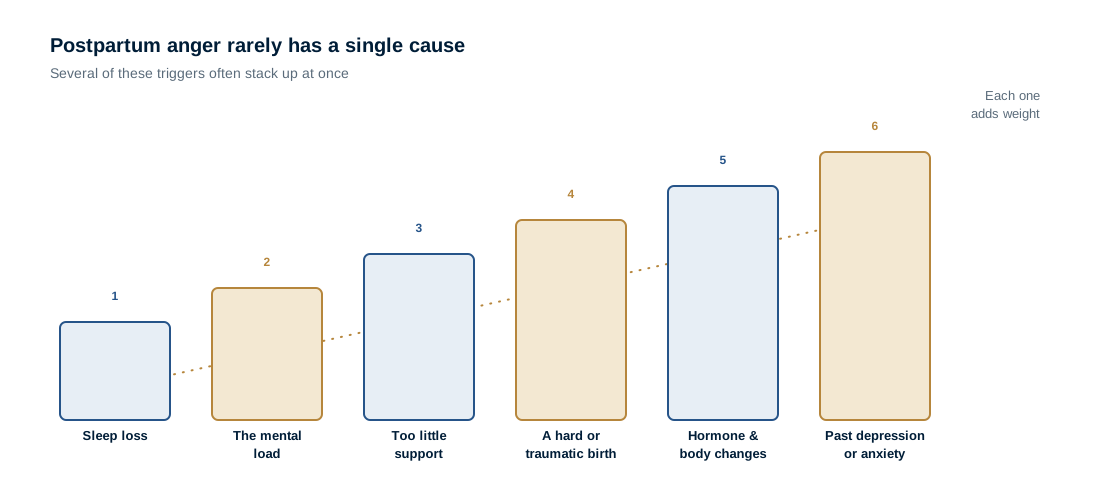
Postpartum anger rarely has a single cause. Several of these triggers often stack up at once:
Sleep loss. Broken sleep lowers patience and makes small problems feel large. In an Iowa State University study, adults who slept 2 to 4 hours less than usual for two nights reported much more anger than those who slept normally. They also had a harder time getting used to an irritating noise over time.
The mental load. The mental load is the invisible work of running a home: tracking feedings, diapers, appointments, supplies, and what comes next. In a study of U.S. mothers, about 9 in 10 said they were mainly responsible for the family schedule. Mothers who felt overly responsible for running the household felt more overwhelmed and less satisfied with their lives and their partners.
Too little support. Little or no help from a partner, family, or friends raises the risk of postpartum depression. So do relationship strain and money problems.
A hard or traumatic birth. A birth can be traumatic even when mother and baby are physically fine. It might involve an emergency C-section, heavy bleeding, a baby rushed to the NICU, or feeling scared, unheard, or out of control in the delivery room. If birth-related trauma lingers, it is its own treatable condition — see trauma and PTSD treatment.
Hormone and body changes. Hormone levels drop quickly in the first day after birth, and researchers think this shift may play a role in postpartum depression. Thyroid levels can drop after birth and cause mood symptoms. A simple blood test can check for this.
Past depression or anxiety. Depression before or during pregnancy, or a family history of depression, raises the risk of postpartum depression.
How Long Does Postpartum Rage Last?
There is no set timeline. Irritability that comes with the baby blues usually fades within the first 2 weeks. Mood changes that are severe or last longer than 2 weeks may be a sign of postpartum depression. Most cases begin within 4 to 8 weeks after birth. Symptoms can also start any time in the first year.
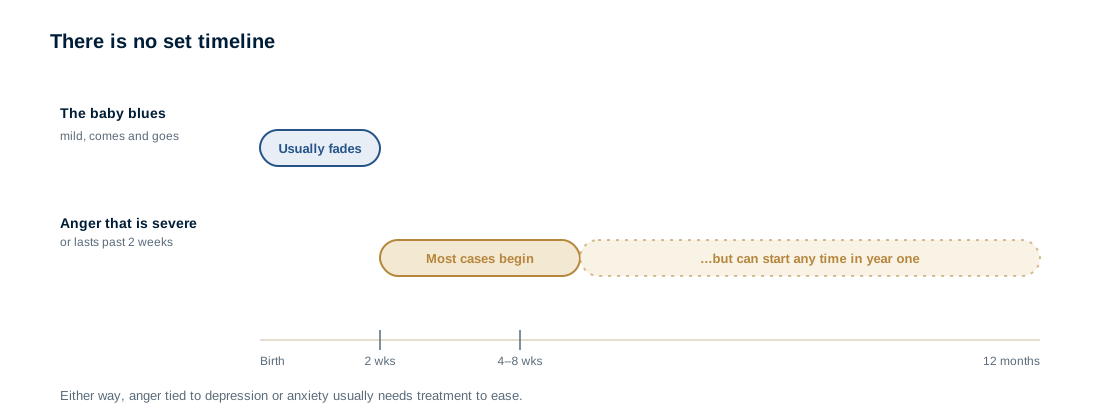
When anger is tied to depression or anxiety, it usually needs treatment. Women with postpartum depression generally do not feel better without it.
What Can Help in the Moment?
These steps can help reduce the intensity of an outburst. When depression or anxiety is involved, they work best alongside treatment.
Step Away Safely
If anger builds while you are holding or feeding the baby, lay the baby on their back in the crib and leave the room for a few minutes. A baby who is crying in a safe crib is okay for a short time. Breathe slowly, drink a glass of water, or step outside until your body settles.
Protect Sleep in Shifts
Trade night duties with a partner or support person so each of you gets one longer stretch of sleep. If you are feeding at night, ask someone else to handle burping, changing, and settling the baby afterward.
Share the Mental Load
Write the running list down and split it out loud. Hand over whole jobs instead of single steps. For example, one person owns bottles, from washing to restocking. Be clear about what you need. People cannot help with a list they cannot see.
Notice Your Early Signs
Rage often gives warning signs first: a tight jaw, a hot face, clenched hands, or a racing heart. Track when outbursts happen. Patterns around hunger, night feedings, or a certain time of day show you where to add support.
When Should You Call for Help?
The Office on Women's Health advises calling your doctor, nurse, or midwife when symptoms last or disrupt daily life. Reach out if your anger:
- Lasts more than 2 weeks, or feels very intense from the start.
- Happens most days, or scares you, your partner, or your children.
- Comes with sadness, hopelessness, numbness, or constant worry.
- Makes it hard to care for yourself or your baby.
- Leads you to rely on alcohol or other substances to calm down.
If you have thoughts of harming yourself or your baby, call 911 or go to the nearest emergency room. You can also call or text 988. Seeing or hearing things others do not, trouble sleeping even when the baby sleeps, or sudden confusion also needs help right away.
For support any time, call or text the National Maternal Mental Health Hotline at 1-833-TLC-MAMA (1-833-852-6262). The hotline is free and open 24/7.
What Does Treatment Include?
Care starts with an assessment. A clinician will ask about your mood, anger, sleep, support at home, birth experience, past mental health, and any substance use. Your OB-GYN or primary care provider may also check your thyroid and other physical causes.
At Hopewell Health Solutions, next steps may include individual therapy to understand your anger, build coping skills, and work through stress, anxiety, or depression. Psychiatric medication management is also available. A prescriber can review options with you, including medicines that you can take while breastfeeding.
Our Women's Wellness Intensive Outpatient Program offers structured care in a group designed for women who need more support than weekly therapy.
To get started, call (860) 735-1448, and our team will verify your insurance benefits at no cost before your first appointment.
What Matters Most
- Postpartum rage is sudden, intense anger after having a baby, and it is common.
- Anger and irritability are recognized signs of postpartum depression and anxiety.
- Sleep loss, the mental load, and too little support are common triggers.
- Irritability from the baby blues usually fades within 2 weeks. Anger that lasts longer may need treatment.
- Call a provider when anger lasts, happens most days, or makes daily life hard. Call 911 or 988 for thoughts of harming yourself or your baby.
There Is Hope to Heal
Postpartum rage is a signal that sleep, support, or your mental health needs care.
Hopewell Health Solutions provides outpatient mental health and psychiatric care from our Connecticut offices in Glastonbury, West Hartford, East Hampton, and Westbrook, plus telehealth statewide.
More than 50 licensed clinicians, prescribers, psychologists, and therapists work with us, and we have been a Joint Commission accredited practice serving Connecticut clients since 2013.
Whether you are asking for yourself or for someone you love, admissions will walk you through the next step. Call (860) 735-1448.
Sources
- Office on Women's Health. 2023. Postpartum Depression. U.S. Department of Health and Human Services.
- Postpartum Support International. 2023. We Can Help with Perinatal Mental Health: Parents Fact Sheet. Postpartum Support International.
- National Institute of Mental Health. n.d. Perinatal Depression. National Institute of Mental Health.
- Judd, L.L., Schettler, P.J., Coryell, W., et al. 2013. Overt Irritability/Anger in Unipolar Major Depressive Episodes: Past and Current Characteristics and Implications for Long-term Course. JAMA Psychiatry, 70(11), 1171-1180.
- Krizan, Z., and Hisler, G. 2019. Sleepy Anger: Restricted Sleep Amplifies Angry Feelings. Journal of Experimental Psychology: General, 148(7), 1239-1250.
- Ciciolla, L., and Luthar, S.S. 2019. Invisible Household Labor and Ramifications for Adjustment: Mothers as Captains of Households. Sex Roles, 81, 467-486.
Written by

Tracy Sibley, PMHNP-BC, APRN
Board-Certified Psychiatric Mental Health Nurse Practitioner
Tracy Sibley, PMHNP-BC APRN, is a board-certified psychiatric mental health nurse practitioner with Hopewell Health Solutions, located in Glastonbury and West Hartford, Connecticut.
Read Full Bio →Medically reviewed by Kristine Schlichting, PhD, Director & Founder.