

A 2026 review of 19 studies found a small but significant correlation between pornography consumption and anxiety, and only problematic use, not general use, carried that association. Watching pornography does not automatically produce an anxiety disorder. Where the two appear together, the relationship tends to run in both directions, and both directions respond to treatment.
Does Pornography Cause Anxiety?
Researchers followed over 4,000 adults for a year, checking in every six months. People who struggled more with pornography use were more anxious overall, but a heavier stretch of use for any one person did not predict more anxiety at their next check-in.
In plain terms: people who report problematic pornography use also tend to report more anxiety. That is different from pornography turning an otherwise settled person into an anxious one.
What Does Problematic Use Actually Mean?
Problematic use describes impaired control: repeated attempts to stop that do not hold, use that continues despite consequences, and distress that persists for months rather than days.
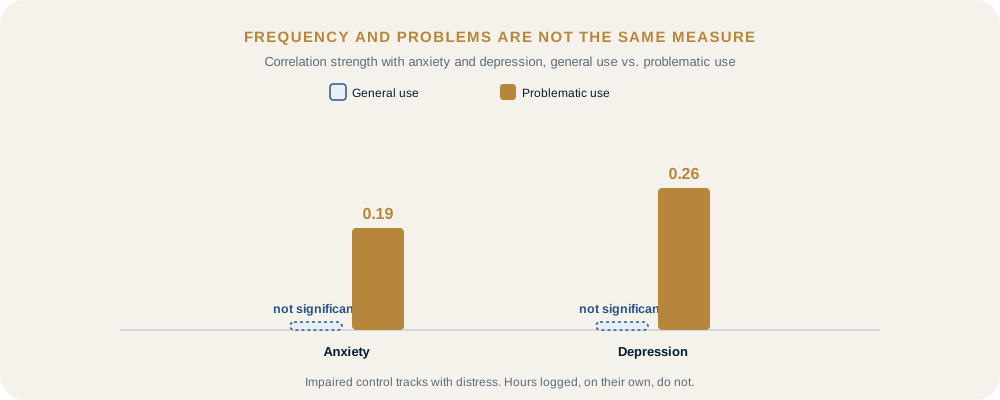
Frequency and problems are not the same measure. When researchers separated the two, problematic consumption was associated with anxiety and depression, while general consumption was not.
How Anxiety Can Increase Pornography Use
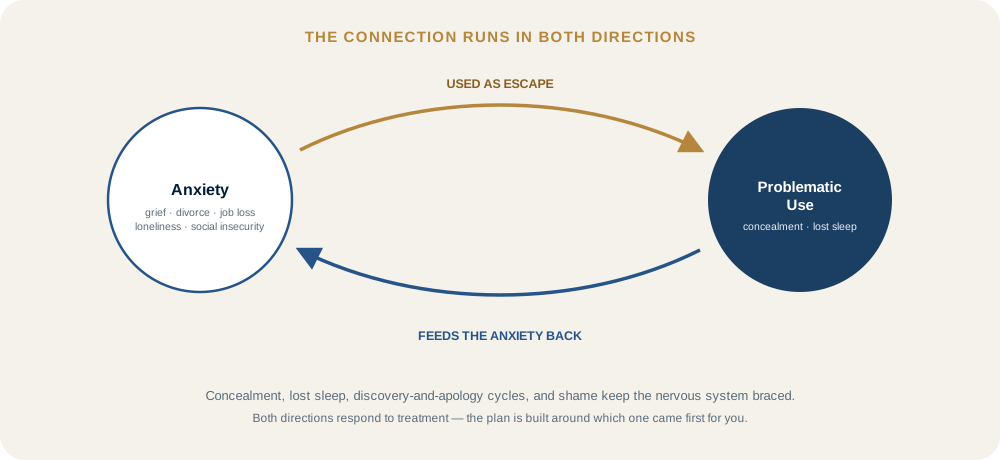
Anxiety can make daily life feel unmanageable, and it rewards whatever reliably lowers arousal fastest. Similar to drugs and alcohol, watching porn can function as short-term coping, easing distress in the moment while the underlying pattern continues to build over time.
The stress factors that push people toward that kind of escape are usually specific and nameable:
- Grief
- Divorce or separation
- Job loss
- Chronic loneliness after a move or a breakup
- Social insecurity carried forward from years of being bullied
This is the same mechanism seen with alcohol, food, and scrolling. Relief arrives quickly, lasts briefly, and leaves the original anxiety in place.
How Pornography Use Can Worsen Anxiety
Moving in the other direction, several features of problematic use raise anxiety rather than settle it:
- Concealment requires ongoing vigilance over devices, accounts, browser history, and timing, and sustained vigilance is what anxiety is made of.
- Late-night use shortens sleep, and short sleep lowers the threshold for anxiety the following day.
- Cycles of discovery, argument, apology, and broken promises keep the nervous system braced for the next confrontation.
- Each cycle adds evidence to an existing belief about being weak, deceptive, or defective.
- Trying to stop and failing is anxiety-producing on its own, separate from anything about the behavior itself.
- Use that replaces contact deepens the isolation that made it appealing to begin with.
How Much of the Distress Comes From Shame?
A study of nearly 67,000 adults across 34 countries found that the same amount of use caused far more reported problems for people who believed pornography was wrong than for people who did not.
Two people with nearly identical habits can arrive at very different levels of distress, depending on how far the behavior sits from their own values. Shame is not a side note here. It is part of what generates the anxiety, which is why treatment has to address it directly.
What About Partners? Betrayal Trauma and Relationship Fallout
Anxiety in these situations rarely affects one person. Partners who discover hidden use often present with symptoms of trauma, not just “jealousy.” These can include intrusive thoughts, hypervigilance, checking behaviors, disrupted sleep, and difficulty trusting their own read on the relationship. Clinicians commonly describe this as betrayal trauma, and it is treated as trauma rather than as insecurity.
Where a relationship ends in separation or divorce, the anxiety that follows usually has several sources at once, including the betrayal itself, the loss, financial disruption, and co-parenting. Sorting out which source is driving which symptom is part of the clinical work.
Does Age Change the Picture?
Yes. The link between pornography use and anxiety is clearer in younger users, and it is weak to the point of near-disappearing in older ones.
When Does Pornography Use Become a Clinical Concern?
The official diagnosis is Compulsive Sexual Behavior Disorder (CSBD). It describes a persistent failure to control repetitive sexual impulses that continues for six months or longer and causes marked distress or functional impairment.
In a community sample of nearly 300 adults, 10.8% screened positive for probable CSBD. Those adults were also more likely to report symptoms of Attention-Deficit/Hyperactivity Disorder (ADHD) and Borderline Personality Disorder (BPD), problems with social media and drug use, and higher levels of compulsivity and impulsivity.
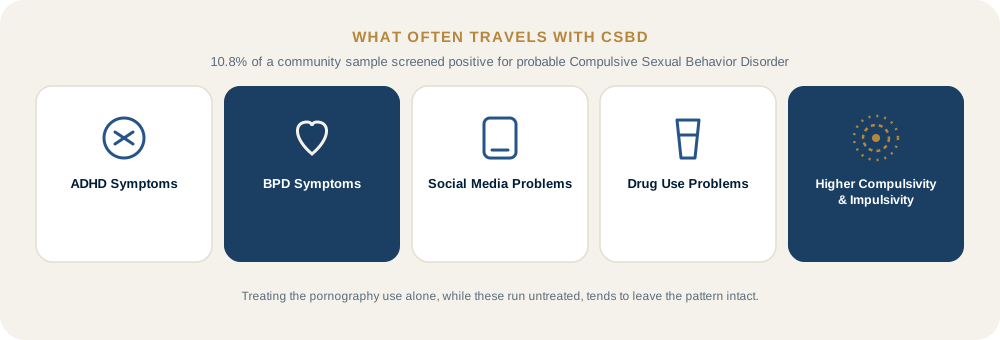
The combination is the norm rather than the exception. Among over 1,000 college students, alcohol use problems were moderately to strongly associated with compulsive sexual behaviors, and depression was associated with problematic pornography use in women.
Addressing the pornography use alone, while an untreated anxiety disorder, depression, or drinking problem continues, tends to leave the pattern intact.
How Is CSBD Treated?
Treatment begins with an assessment that identifies what is driving the pattern, because the plan for anxiety-driven use looks different from the plan for trauma-driven or compulsivity-driven use.
In practice, a plan usually combines several of the following:
- Cognitive Behavioral Therapy (CBT) for the thinking patterns and situational triggers that precede use.
- Acceptance and values-based work, which reduces the shame cycle rather than adding another rule to break.
- Dialectical Behavior Therapy (DBT) skills for distress tolerance and emotional regulation.
- Eye Movement Desensitization and Reprocessing (EMDR) or Accelerated Resolution Therapy (ART) when trauma, including sexual and betrayal trauma, is part of the history.
- Couples work when the relationship itself has become a primary source of anxiety for both people.
- Group therapy, which addresses the isolation and secrecy that keep the pattern running.
- Medication management for a co-occurring anxiety disorder or depression, assessed on its own terms.
A meta-analysis of psychotherapy for problematic pornography use found that CBT and acceptance-based approaches, such as Acceptance and Commitment Therapy (ACT), had the strongest and most consistent evidence, with no meaningful difference between the two.
At Hopewell Health Solutions, care is available at several levels. Weekly counseling suits many people. An Intensive Outpatient Program (IOP) provides structured group and individual work several days a week, and a Partial Hospitalization Program (PHP) offers full-day treatment when outpatient therapy has not been enough.
What Matters Most
- Pornography use does not automatically cause an anxiety disorder, yet problematic use and anxiety are correlated.
- The connection runs in both directions. Anxiety, loneliness, grief, divorce, and long-standing insecurity can increase use as a form of escape. Secrecy, lost sleep, relationship conflict, shame, and failed attempts to stop feed the anxiety back.
- General use and problematic use behave differently in the research. Impaired control, not hours logged, is what tracks with distress.
- Partners are affected too, and their symptoms often look like trauma rather than jealousy.
- CBT and acceptance-based approaches have the strongest evidence, and co-occurring anxiety, depression, or substance use needs treatment alongside.
There Is Hope to Heal
If anxiety and a habit you cannot seem to interrupt have started to shape your week, an assessment is a reasonable next step.
Hopewell Health Solutions provides outpatient mental health care from six Connecticut locations, including Glastonbury, West Hartford, East Hampton, and Westbrook, plus telehealth across the state.
More than 50 licensed clinicians, prescribers, psychologists, and therapists work with us, and we are a Joint Commission accredited practice that has served Connecticut clients since 2013.
One conversation is enough to start. Speak with admissions today. Call (860) 735-1448.
Sources
- Tan, J.Y., et al. (2026). Association Between Self-Reported Pornographic Consumption Habits and Anxiety and Depression: A Systematic Review and Meta-Analysis. Journal of Clinical Medicine, 15(13), Article 5030.
- Engelhardt, R., et al. (2025). Problematic Pornography Use and Psychological Distress: A Longitudinal Study in a Large US Sample. Addictive Behaviors, 169, Article 108398.
- Bőthe, B., et al. (2026). A Global Investigation of the Moral Incongruence Model of Pornography Use Across Genders, Religions, and Cultures. Journal of Behavioral Addictions, 15(2), 636-649.
- Grant, J.E., et al. (2025). Compulsive Sexual Behavior Disorder: Rates and Clinical Correlates in a Community Sample. Frontiers in Psychiatry, 16, Article 1561885.
- Moon, E.J., et al. (2026). Compulsive Sexual Behaviors, Pornography Consumption, and Co-Occurring Disorders Among College Students. Archives of Sexual Behavior, 55(5), 2299-2315.
- López-Pinar, C., et al. (2025). Psychotherapy for Problematic Pornography Use: A Comprehensive Meta-Analysis. Journal of Behavioral Addictions, 14(2), 630-643.
Written by

Teesha Huertas, LCSW
Clinic Director & Licensed Clinical Social Worker
Teesha is a Licensed Clinical Social Worker who graduated from UConn with her BA in Psychology and Master's in Social Work. Teesha has been in the Behavioral Health field for a decade now and has worked in a variety of settings. Teesha's clinical experience has come from working as a case manager, inpatient and outpatient clinician, crisis worker, and clinical director in Substance Use Rehabilitation Programs. Teesha is an experienced leader who leads with compassion, ethics, and discipline. She believes in guiding and motivating the people she works with to develop the skills necessary for strategic decision making and the execution of goals and growth.
Read Full Bio →Medically reviewed by Kristine Schlichting, PhD, Director & Founder.