

An estimated 21 million American adults, about 8.3% of the adult population, had at least one major depressive episode in a single year, and loss of interest or pleasure is one of the two symptoms a diagnosis requires. Feeling empty is usually the symptom rather than the condition itself. It shows up most often in depression, and it responds to the same structured care that treats the disorder underneath it.
What Does It Mean to Feel Empty?
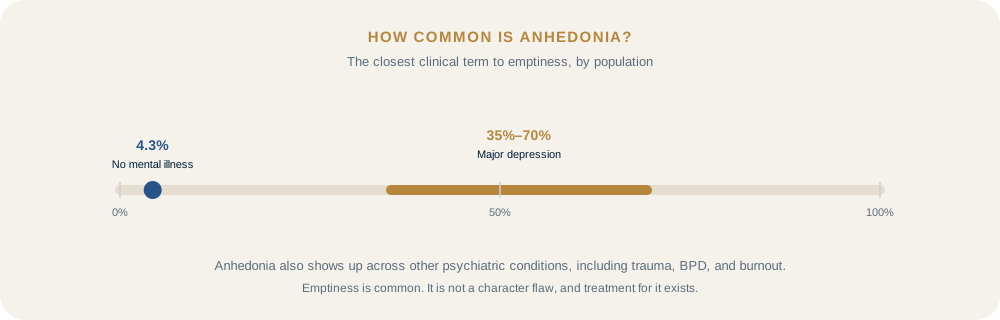
People describe it differently: numbness, flatness, or a sense that something at the center is missing even when life looks fine from the outside. The closest clinical term is anhedonia, the reduced ability to feel interest or pleasure. Reviews place its prevalence among people with Major Depressive Disorder (MDD) between 35% and 70%, and it shows up across other psychiatric conditions too, including trauma, bipolar disorder, and obsessive-compulsive disorder.
Emptiness is common. It is not a character flaw or a sign of weakness, and treatment for it exists.
Is Feeling Empty the Same as Depression?
Not always. Anhedonia affects roughly 4.3% of people with no mental illness at all, so short stretches of flatness can occur with nothing diagnosable behind them.
How long it lasts is often what distinguishes a short-term phase from a more serious mental health condition. A quiet few weeks after an exhausting year is one thing. Six months of emptiness, where sleep, work, or your closest relationships are slipping, is another.
Why Do I Feel Empty Inside?
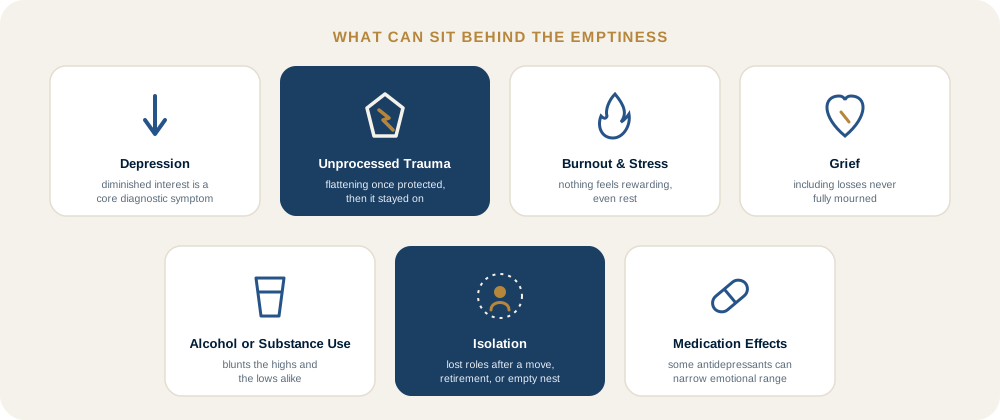
Many factors can influence the feeling of emptiness, including depression, unprocessed trauma, burnout, grief, substance use, isolation, and certain medications, and treatment varies depending on which one is driving it.
The most common include:
- Depression, where diminished interest or pleasure is a core diagnostic symptom rather than a side effect.
- Unprocessed trauma, where flattening emotion once served as protection and then stayed on.
- Burnout and chronic stress, which prevent experiences and connections from feeling rewarding.
- Grief, including losses that were never fully mourned, such as a marriage, a career, or a version of yourself.
- Alcohol or substance use, which blunts the low points and the high points of life alike.
- Isolation and the loss of meaningful roles, particularly after a move, a retirement, or an empty nest.
- Medication effects, because some antidepressants can narrow the emotional range in some people.
That last point deserves a specific note. If your mood improved on medication but you also stopped feeling much, that is worth raising with your prescriber rather than solving alone. Dose adjustments and alternative options exist, and stopping abruptly on your own carries risks.
Is Chronic Emptiness a Sign of Borderline Personality Disorder (BPD)?
It can be. Chronic feelings of emptiness sit among the Diagnostic and Statistical Manual of Mental Disorders, Fifth Edition, Text Revision (DSM-5-TR) criteria for Borderline Personality Disorder (BPD), alongside fear of abandonment, unstable self-image, and impulsivity.
A diagnosis requires a much broader pattern of symptoms, so emptiness on its own does not point to BPD. Only a full clinical assessment can answer that question.
Can Trauma Make You Feel Numb?
Yes, and it is common. About half of all U.S. adults will experience at least one traumatic event, and feeling detached or numb is among the recognized symptoms of Post-Traumatic Stress Disorder (PTSD).
Numbness after trauma is not indifference. A more accurate description: the nervous system turns the volume down on everything as a coping mechanism, and it does not turn back up until it is taught to.
When Does Feeling Empty Need Treatment?
Feeling empty warrants a professional assessment once it has lasted more than two weeks without lifting, or once it starts costing you sleep, work, or closeness with the people you love.
Other signs point the same way:
- Activities you used to love now feel like obligations, or like nothing at all.
- You are functioning at work but running on autopilot, with nothing left afterward.
- You feel disconnected from your partner, your children, or your closest friends.
- You are drinking more, scrolling more, using substances, or taking risks in order to feel something.
Untreated emptiness carries real weight. Among U.S. adults with depression, more severe anhedonia correlated with more severe depression and anxiety, poorer mental and physical quality of life, and greater impairment while working. It is also associated with suicidality, which is one reason clinicians take it seriously as a symptom in its own right.
If emptiness has turned into suicidal thoughts, it's time to get immediate help. The 988 Suicide and Crisis Lifeline is available in the United States around the clock by call or text.
How Is Feeling Empty Treated?
Treatment begins with a medical assessment to determine what is producing the emptiness, followed by a clinical plan matched to that cause — often a combination of therapy, medication management, or a more structured level of care.
Several clinical approaches are commonly recommended:
- Behavioral work that restores activity before motivation returns, on the principle that action comes first and feeling follows.
- Cognitive Behavioral Therapy (CBT) for the thinking patterns that keep pulling you back from people and activities.
- Dialectical Behavior Therapy (DBT) for emotional regulation, distress tolerance, and a steadier sense of self.
- Eye Movement Desensitization and Reprocessing (EMDR) and Accelerated Resolution Therapy (ART) when unprocessed trauma is driving the numbness.
- Group therapy, which addresses the isolation that emptiness tends to deepen.
- Psychiatric medication management, personalized to your medical history and triggers for emptiness.
When medication and therapy have not been enough, Transcranial Magnetic Stimulation (TMS) is worth discussing. In 144 adults with treatment-resistant depression, a standard course of TMS produced a significant reduction in anhedonia, and patients with severe anhedonia at the start were as likely as anyone else to respond or reach remission.
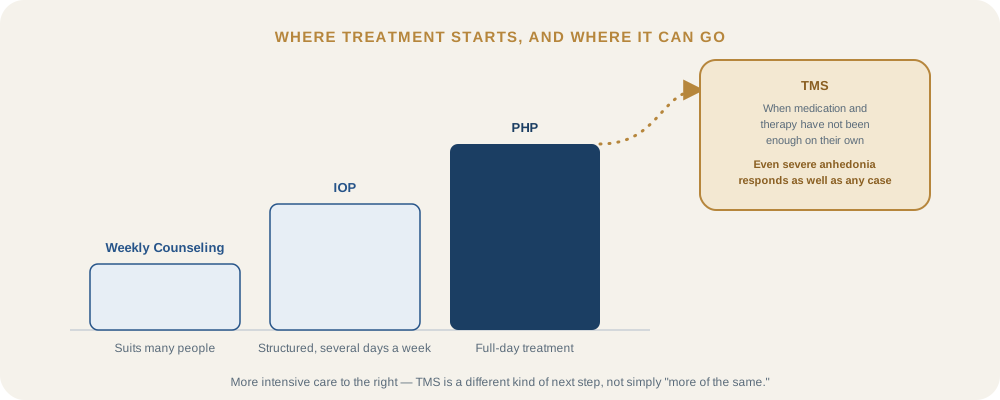
At Hopewell Health Solutions, we offer different program structures to target emptiness and the bigger conditions that surround it, including weekly counseling, an Intensive Outpatient Program (IOP), and a Partial Hospitalization Program (PHP).
What Matters Most
- Feeling empty is a symptom rather than a diagnosis, and the conditions behind it are treatable.
- Anhedonia, the closest clinical form of emptiness, occurs in 35% to 70% of people with major depression, and also shows up in trauma, BPD, burnout, and substance use.
- More than two weeks of emptiness that costs you sleep, work, or closeness warrants an assessment.
- Treatment can start with weekly therapy or a structured care program, and approaches including TMS reach the emptiness even when previous treatment hasn't been enough.
There Is Hope to Heal
If you've been unable to feel for a while, Hopewell Health Solutions provides outpatient mental health care from six Connecticut locations, including Glastonbury, West Hartford, East Hampton, and Westbrook, plus telehealth services across the state.
More than 50 licensed clinicians, prescribers, psychologists, and therapists work with us, and we are a Joint Commission accredited practice that has served Connecticut clients since 2013.
Feeling again is possible, and it starts with one conversation. Speak with admissions today. Call (860) 735-1448.
Sources
- National Institute of Mental Health. (n.d.). Major Depression. National Institute of Mental Health.
- Al-Soleiti, M., et al. (2025). Anhedonia as a Core Symptom of Depression and a Construct for Biological Research. Focus, 23(2), 163-172.
- Chapman, J., et al. (2024). Borderline Personality Disorder. StatPearls. StatPearls Publishing.
- National Institute of Mental Health. (n.d.). Post-Traumatic Stress Disorder (PTSD). National Institute of Mental Health.
- Kale, H., et al. (2025). Association Between Anhedonia Severity and Clinical, Humanistic, and Economic Outcomes Among US Adults With Major Depressive Disorder. International Journal of Neuropsychopharmacology, 28(8), Article pyaf048.
- Fukuda, A.M., et al. (2021). Effects of Transcranial Magnetic Stimulation on Anhedonia in Treatment Resistant Major Depressive Disorder. Brain and Behavior, 11(9), Article e2329.
Written by

Tracy Sibley, PMHNP-BC, APRN
Board-Certified Psychiatric Mental Health Nurse Practitioner
Tracy Sibley, PMHNP-BC APRN, is a board-certified psychiatric mental health nurse practitioner with Hopewell Health Solutions, located in Glastonbury and West Hartford, Connecticut.
Read Full Bio →Medically reviewed by Kristine Schlichting, PhD, Director & Founder.