

About half of American smartphone users worry that they use their phone too much, and that figure climbs to 80% among adults under 30. Stopping compulsive scrolling takes more than willpower or a screen time limit, because the habit is usually doing a job: quieting anxiety, filling silence, or postponing sleep. Here is what helps lower scrolling, and when the pattern points to a treatable mental health condition.
Is Scrolling Addiction a Real Condition?
The American Psychiatric Association (APA) describes technology addiction as excessive use that produces problems and distress, where the behavior continues in order to avoid or relieve anxiety and irritability, rather than for enjoyment. People affected can experience tolerance and withdrawal similar to what occurs in substance use disorders.
The label itself is not a diagnosis. Gambling Disorder remains the only behavioral addiction included in the Diagnostic and Statistical Manual of Mental Disorders, Fifth Edition, Text Revision (DSM-5-TR). Internet Gaming Disorder appears only in the section reserved for conditions requiring further study.
Scrolling addiction not being a formal diagnosis does not make the problem imaginary, but it does mean that treatment is focused largely on the consequences and the drivers of scrolling: lost sleep, missed work, avoided conversations, and anxiety or low mood.
How Much Screen Time Is Too Much?
No single number applies to everyone, and the APA notes that hours alone do not indicate a disorder. Volume still matters.
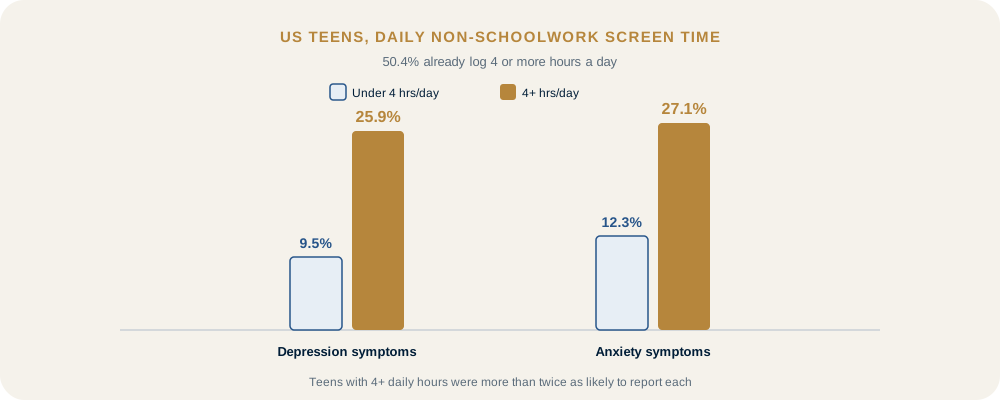
In a nationally representative survey of United States teenagers aged 12 to 17, half reported 4 or more hours of daily non-schoolwork screen time. That group was more than twice as likely to report depression and anxiety symptoms.
What Are the Signs That Scrolling Has Become a Problem?
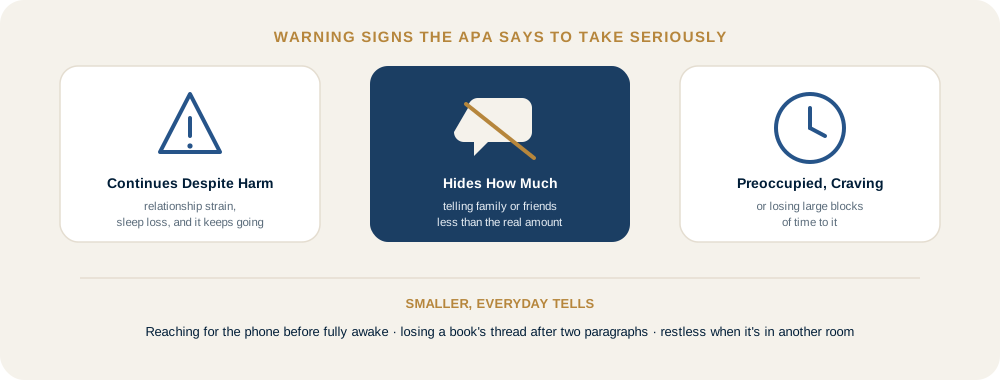
The APA points to several behavior patterns worth taking seriously:
- Continuing to use technology despite knowing it causes harm, including relationship strain and sleep loss.
- Lying to family or friends about how often you are on your phone.
- Constant preoccupation, cravings, or losing large blocks of time to scrolling.
In practice, people notice smaller things first. Reaching for the phone before fully waking up. Losing the thread of a book after two paragraphs. Feeling restless when the phone is in another room.
Why Does Scrolling Get Worse at Night?
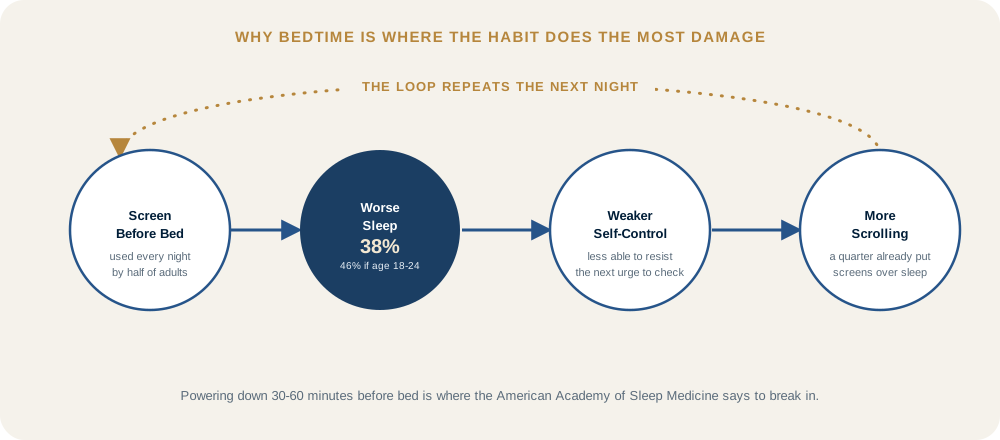
Bedtime is where the habit does the most damage. In a 2026 national survey by the American Academy of Sleep Medicine (AASM), 38% of United States adults said that reading news on a phone or tablet before bed made their sleep worse, rising to 46% among adults aged 18 to 24.
Half of adults reported using a screen in bed every day, and about a quarter said that they prioritize screen time over the sleep they need.
Poor sleep then weakens the self-control required to stop scrolling the following night. That loop is why bedtime is usually the first place to take action around scrolling addiction.
How Do You Stop Scrolling Addiction?
People can't rely on willpower alone. Changing the conditions of scrolling works better:
- Charge the phone outside the bedroom and use a standard alarm clock. The AASM recommends powering down electronics 30 to 60 minutes before bed.
- Turn off notifications rather than relying on yourself to ignore them.
- Remove the most compulsive apps from your phone and keep them on a device you reach for less often.
- Fill the slot instead of only deleting it. Adults who lost mobile internet access spend time socializing in person, exercising, and being outdoors.
- Name the trigger before you unlock the screen, because boredom, loneliness, and dread each call for a different behavioral response.
- Track function rather than minutes. Sleep, work, and how present you are with people tell you more than a weekly screen time report.
Does a Digital Detox Actually Work?
Temporarily, yes, and the effect is larger than most people expect. In a month-long randomized controlled trial, blocking mobile internet on participants' smartphones for two weeks improved mental health, subjective well-being, and sustained attention. 91% of participants improved on at least one of these three outcomes.
A short break is not a cure, though. The gains hold when the habits that replaced scrolling stay in effect afterward.
When Is Scrolling a Symptom of Something Else?
Compulsive scrolling often sits on top of an untreated condition. Anxiety uses it for reassurance. Depression uses it to pass hours that feel unbearable. Attention-Deficit/Hyperactivity Disorder (ADHD) makes low-effort stimulation difficult to leave, and trauma symptoms use it to stay numb.
The relationship runs both ways. High screen use means worse sleep, less physical activity, and weaker social and emotional support, each of which feeds depression and anxiety in turn.
If cutting back leaves you anxious, flat, or unable to sit still, the scrolling was probably managing something. That something responds to treatment.
What Treatment Helps When Scrolling Feels Uncontrollable?
A synthesis of 125 studies on problematic digital technology use found that structured psychological therapies produced the most consistent benefit. The strongest results came from approaches aimed at regaining control of use and reducing the cues that drive unhealthy use.
The APA identifies assessment and counseling as the first step. Cognitive Behavioral Therapy (CBT) is most commonly used, while family involvement in therapy is also helpful for many people.
At Hopewell Health Solutions, our clinicians use CBT, Dialectical Behavior Therapy (DBT), Eye Movement Desensitization and Reprocessing (EMDR), and Accelerated Resolution Therapy (ART) to treat scrolling addiction and the causes that sit deeper beneath.
Care is available at every level. We have weekly counseling, an Intensive Outpatient Program (IOP) with day and evening tracks, and a Partial Hospitalization Program (PHP). Teen and tween IOPs serve ages 8 through 18, with families included in the work to ensure comprehensive healing.
What Matters Most
- Compulsive scrolling is not a formal diagnosis, and the distress, lost sleep, and decline in functioning it produces are treatable.
- Hours alone do not define the problem of scrolling, impairment does. Teenagers with 4 or more hours of daily screen time are more than twice as likely to report depression symptoms.
- Bedtime is the highest-yield place to start addressing scrolling addiction, especially considering how late-night use tracks with worse sleep and mental health.
- Structured therapy shows the most consistent benefit for scrolling addiction, as it also treats the anxiety, depression, or ADHD driving the behavior.
There Is Hope to Heal
If scrolling is costing you sleep, focus, or time with the people you love, Hopewell Health Solutions provides outpatient mental health care from six Connecticut locations, including Glastonbury, West Hartford, East Hampton, and Westbrook, plus telehealth services across the state.
We have more than 50 licensed clinicians, prescribers, psychologists, and therapists on our team, and we're a Joint Commission accredited practice serving clients aged 4 and older.
We will help you find the right level of care. Speak with admissions today. Call (860) 735-1448.
Sources
- Castelo, N., et al. (2025). Blocking Mobile Internet on Smartphones Improves Sustained Attention, Mental Health, and Subjective Well-Being. PNAS Nexus, 4(2), Article pgaf017.
- Sherer, J. (n.d.). Technology Addictions: Social Media, Online Gaming, and More. American Psychiatric Association.
- Zablotsky, B., et al. (2025). Associations Between Screen Time Use and Health Outcomes Among US Teenagers. Preventing Chronic Disease, 22, Article 240537.
- American Academy of Sleep Medicine. (2026, Feb. 23). Americans Are Doomscrolling at Bedtime, Prioritizing Screen Time Over Sleep. American Academy of Sleep Medicine.
- Balhara, Y.P.S., et al. (2026). Therapeutic Interventions Targeted at Problematic Use of Digital Technology: Systematic Review and Meta-Analysis of Evidence. JMIR Mental Health, 13, Article e89280.
Written by

Teesha Huertas, LCSW
Clinic Director & Licensed Clinical Social Worker
Teesha is a Licensed Clinical Social Worker who graduated from UConn with her BA in Psychology and Master's in Social Work. Teesha has been in the Behavioral Health field for a decade now and has worked in a variety of settings. Teesha's clinical experience has come from working as a case manager, inpatient and outpatient clinician, crisis worker, and clinical director in Substance Use Rehabilitation Programs. Teesha is an experienced leader who leads with compassion, ethics, and discipline. She believes in guiding and motivating the people she works with to develop the skills necessary for strategic decision making and the execution of goals and growth.
Read Full Bio →Medically reviewed by Kristine Schlichting, PhD, Director & Founder.